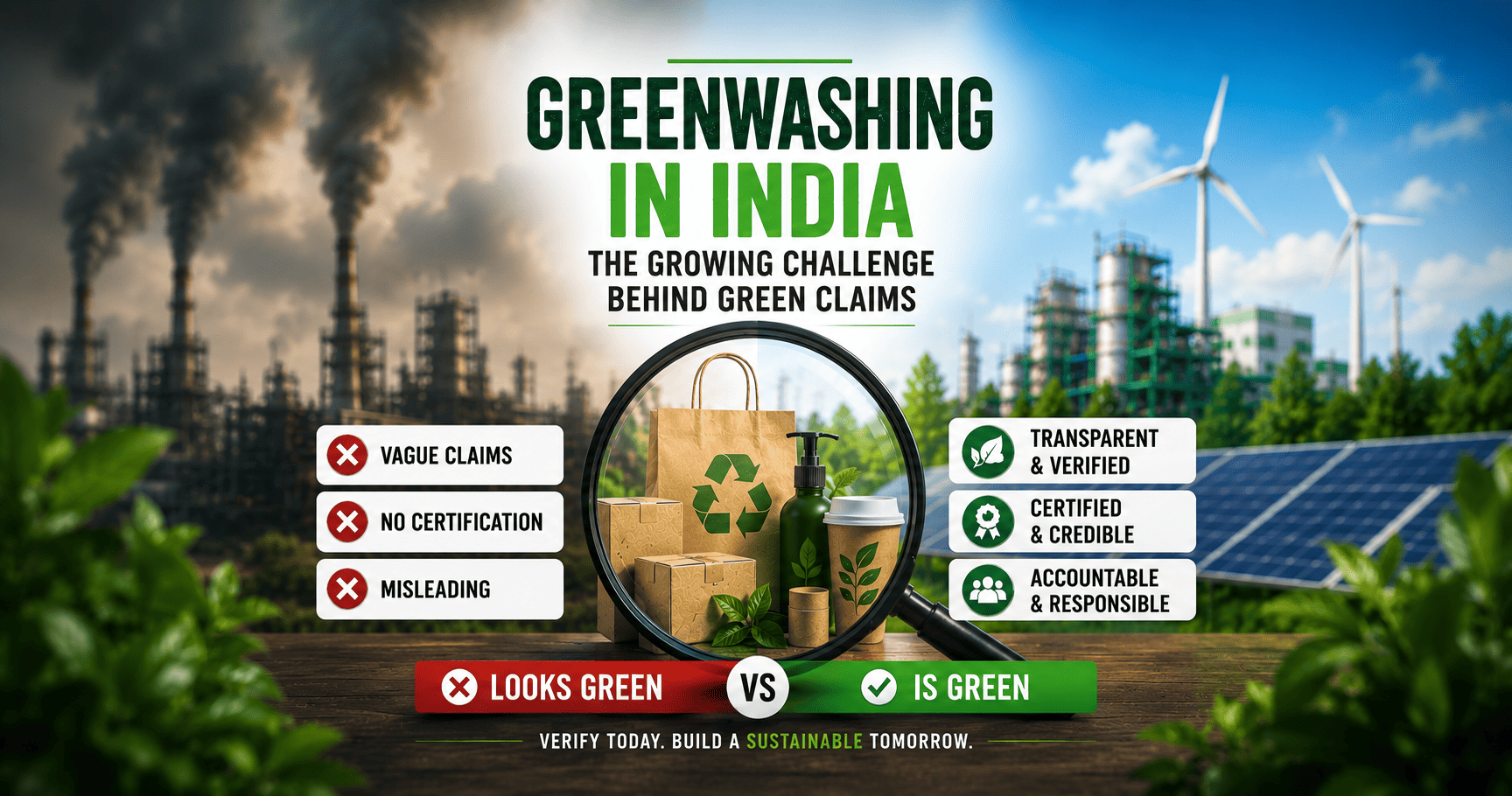
Greenwashing in India: Why Verified Sustainability Matters More Than Ever
Consumers today are paying closer attention to sustainability than ever before. Businesses across sectors are responding with eco-friendly packaging, climate commitments, and environmental messaging designed to appeal to conscious buyers.
However, not all sustainability claims reflect genuine action. As demand for green products grows, so does greenwashing — the practice of portraying a product, service, or company as more environmentally responsible than it actually is.
Sustainability should be backed by evidence, transparency, and measurable outcomes — not just marketing claims.
What is Greenwashing?
Greenwashing occurs when businesses use misleading, exaggerated, or unverified environmental claims to improve their public image or increase sales.
Common examples include:
- Using vague terms such as "eco-friendly," "green," or "natural" without proof.
- Promoting a small environmental initiative while ignoring larger environmental impacts.
- Claiming sustainability without independent certification.
- Using environmentally themed packaging to create a false perception of sustainability.
The result is often consumer confusion and reduced trust in genuinely sustainable businesses.
Why Greenwashing is Rising in India
India is witnessing a surge in sustainability awareness. Consumers are increasingly concerned about climate change, plastic pollution, and responsible sourcing.
At the same time, businesses face growing pressure from customers, investors, and regulators to demonstrate sustainability performance.
Several factors contribute to the rise of greenwashing:
- Growing consumer demand for sustainable products.
- Inconsistent enforcement of environmental regulations.
- Limited adoption of recognised sustainability certifications.
- Increasing pressure on brands to appear environmentally responsible.
As sustainability becomes a competitive differentiator, some organisations focus more on perception than performance.
Real-World Greenwashing Examples
H&M and Sustainable Fashion Claims
The fashion industry has faced significant scrutiny over sustainability claims.
A 2021 investigation by the Changing Markets Foundation found that many sustainability claims made by major fashion brands were misleading. H&M received particular criticism for marketing environmentally conscious collections while continuing business models associated with overproduction and textile waste.
The case demonstrated how selective sustainability messaging can create a misleading perception of environmental responsibility.
HSBC's Climate Advertisements
In 2022, HSBC faced regulatory action over advertisements that highlighted its climate initiatives while omitting information about its financing of fossil fuel projects.
The advertisements presented only one side of the company's environmental impact, leading regulators to conclude that consumers could be misled.
This case highlighted the importance of complete and balanced sustainability disclosures.
Apple's Carbon-Neutral Claims
Apple faced legal scrutiny in Europe over carbon-neutral claims related to certain products.
Critics argued that the claims relied heavily on carbon offset projects rather than direct emissions reductions. Regulators questioned whether consumers were receiving a complete picture of the products' environmental impact.
The case reflects increasing global scrutiny of climate-related marketing claims.
The Indian Context
Greenwashing in India commonly appears across several sectors.
Examples include:
- Products labelled as "natural" or "chemical-free" without certification.
- Packaging marketed as sustainable without clear recyclability information.
- Brands highlighting small environmental initiatives while ignoring broader operational impacts.
- Products promoted as "organic" without independent verification.
Traditional concepts such as Ayurveda, natural ingredients, and organic farming are sometimes used in marketing campaigns without corresponding sustainability practices.
Why Greenwashing is a Business Risk
Greenwashing affects more than consumers.
Businesses that make misleading environmental claims may face:
- Reputational damage.
- Loss of customer trust.
- Regulatory scrutiny.
- Investor concerns.
- Reduced brand credibility.
As ESG reporting becomes more important, transparency is increasingly viewed as a business necessity.
How Businesses Can Avoid Greenwashing
Organisations committed to sustainability should focus on evidence-based communication.
Best practices include:
- Using recognised third-party certifications.
- Supporting claims with measurable environmental data.
- Conducting independent sustainability audits.
- Publishing transparent ESG reports.
- Avoiding vague or unsubstantiated environmental language.
Authenticity builds long-term trust with customers, investors, and procurement teams.
Looking Ahead
As sustainability becomes increasingly important in India, greenwashing poses a significant challenge to the credibility of the green economy.
Businesses that prioritise transparency, accountability, and measurable environmental performance will be better positioned to earn trust and create long-term value.
For procurement teams, verifying sustainability claims is now as important as evaluating price, quality, and performance.
At BESMUG & Co, we believe sustainable business growth begins with transparency. By connecting organisations with verified sustainable suppliers, we aim to help businesses make informed procurement decisions and strengthen India's sustainable supply chain ecosystem.